
Conservation and Landscape Planning
Master of Science (M.Sc.)
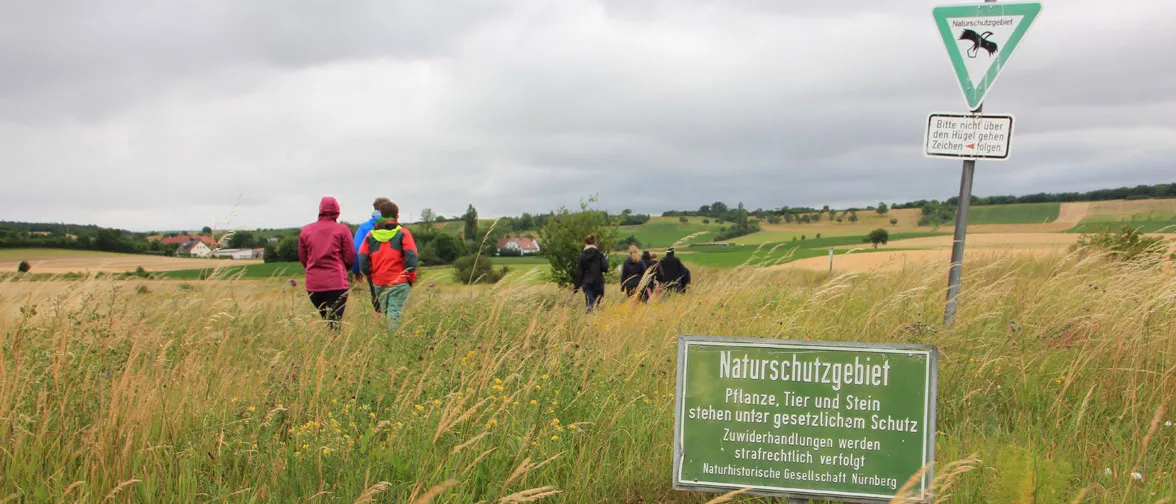
Global warming, the biodiversity crisis, a growing world population, increasing urbanization – these are rapid changes that future land use will have to face. In the Nature Conservation and Landscape Planning Master's program you will develop innovative solutions for nature conservation and use landscape planning as a tool to sustainably ensure ecosystem services, for example in agriculture and forestry. The project-oriented studies help you to acquire specialist, methodological and social skills and to deal with applied issues. The mobility window of the study program offers you a whole semester of practical experience at home or abroad. This gives you the opportunity to apply and expand your knowledge from your studies worldwide in other cultures and natural areas or regionally specifically in Germany. Join us at the TU Munich and study Nature Conservation and Landscape Planning in the heart of Bavaria – a master's degree with vision.

Key data

| Type of Study | Full Time, part time |
| Standard Duration of Studies | 4 Semesters (6 or 8 semester part time) |
| Credits | 120 ECTS |
| Start of Degree Program | Winter Semester |
| Application Period | April 1 - May 31 |
| Admission Category | Aptitude Assessment for Master’s |
| Language of Instruction | German |
| Main Location | Freising (Campus Weihenstephan) |
| Costs |
In the Nature Conservation and Landscape Planning project studies you will deal with the protection of biodiversity and ecosystems as well as with the implementation of conservation objectives. This will enable you to deal with current social challenges and to actively participate in current transformation processes in our living environment.
With its focus on landscape planning, this degree program differs from other master’s programs in the field of nature conservation.
It is characterized by a deepening of knowledge in nature conservation issues and teaches you the methodical approach to landscape planning, so that you can solve complex problems in transformation processes in a goal-oriented manner. The understanding of social and ecological processes and their evaluation is one of the main goals. In order to ensure sustainable nature conservation, you will develop innovative solutions and implement them through landscape planning or other suitable means. During your professional internship in the third semester, you can expand your professional and personal horizons at home and abroad and gain important experience and contacts for your future professional life. In addition to full-time studies, we also offer you various part-time options (50% or 66%). We also allow the Master's degree to be shortened by up to two semesters through recognition of credits: The prerequisite is that you have already achieved equivalent to the compulsory area of the master's degree in a bachelor's degree in landscape architecture or landscape planning with a standard period of study of more than six semesters, or have already completed an internship in the department of approximately six months. Thus, it is possible for you to obtain a master's degree in landscape planning within ten semesters.
With your degree in nature conservation and landscape planning you can take up leading positions in governmental, freelance or private landscape and nature conservation planning or work in university research. Of course you also have the opportunity to do a doctorate or a career in the higher civil service at the federal, state or local level. You are in great demand with an application for planning offices, public administration or international NGOs. You can also find interesting jobs at natural history museums, nature conservation associations or higher authorities in nature conservation.
If you have completed a six- or seven-semester bachelor's degree in landscape architecture and landscape planning at another university, you can become a member of the Chamber of Architects after this Master's degree, which is advantageous for professional practice in planning offices.
The core of the Master’s in Nature Conservation and Landscape Planning is a project study. In the first two semesters 30 credits must be earned in the required modules. This includes two projects with 10 credits each. Topics on theoretical or empirical-ecological planning bases as well as practical, planning and nature conservation topics can be selected. Another 30 credits are covered by electives in the first two semesters, allowing you to pursue your individual professional interests in conservation and landscape planning or, for example, also have the opportunity to take language courses or other interdisciplinary qualifications.
A six-month professional internship is scheduled in the third semester, while at home or abroad you can put your theoretical knowledge into practice and gain insights into the field of landscape planning and nature conservation. You will also gain 30 credits for the extensive report on this that you have to create.
To successfully complete your studies, you will write your Master's thesis in the fourth semester on a topic of your choice.
Through recognition of credits, your Master's degree can be shortened by up to two semesters if you have a bachelor's degree from the corresponding field of study of more than six semesters. This means that the total duration of bachelor's and master's studies remains at ten semesters.
Interest aroused? Just take a look at an exemplary curriculum!
After completing your studies, you will be able to work with the various means of nature conservation and landscape planning to define, design and apply innovative solutions for environmental protection and sustainable development. You will apply in-depth knowledge of organismic ecology to nature conservation strategies and landscape planning. With your ability to recognize complex interrelationships, you will be able to deal with problems that arise and find theoretical, methodical and practical solutions.
You will understand the consequences of global climate change and social change for biodiversity and be able to explain their importance for the sustainable development of landscape and nature. You will have learned to carry out species and biotope surveys and to evaluate them. Developing, working on and scrutinizing planning and nature conservation issues will be as much a part of your acquired knowledge as the preparation of expert reports.
You will be able to present the results of such work in a professional form and communicate at a highly professional level. Due to the project nature of the program, you will also have strengthened your specialist, methodological, social and personal skills and demonstrated them in the professional internship.
General Overview
You will find a general overview on the TUM Website for the application process. The following sections contain program-specific information.
Application Requirements and Admission Requirements
A prerequisite for applying is a qualified Bachelor’s degree of at least six semesters in the fields of landscape architecture and landscape planning (focus on landscape planning, environmental planning), (landscape) ecology, biology (focus on biodiversity, nature conservation, ecology), physical geography (major subject), environmental sciences (environmental protection, environmental planning), or comparable degree programs, which was obtained at a domestic or foreign university
For the Master’s program Nature Conservation and Landscape Planning, there is a so-called 'soft transition' from the Bachelor's to the Master's program, i.e., at the time of application, the following sum of credits has to be achieved:
• for a six-semester Bachelor's program, module examinations totaling at least 120 credits
• for a seven-semester Bachelor's program, totaling at least 150 credits, and
• at least 180 credits for an eight-semester Bachelor's program
Proof of the Bachelor degree must be submitted within one year after starting the Master’s program.
Language Proficiency
The primary language of instruction for the program is German. Therefore, sufficient German language skills must be demonstrated when applying. Applicants must find out whether they need to provide proof of language proficiency, and which German language certificates are accepted.
A Proof of English language proficiency is no longer required.
Preliminary Documentation (VPD)
All applicants with a entrance qualification for Master’s degree programs that was not obtained at a German university must apply for a Preliminary Documentation (VPD); this also applies to entrance qualifications obtained in EU/EEA countries. The VPD must at first be applied for at uni-assist before it is uploaded together with the application at TUM.
| Important: the processing of the VPD at uni-assist can take 6-8 weeks! |
|---|
| An early application is therefore recommended, otherwise delays in processing the application documents at TUM must be expected. This is because only complete application documents can be processed. |
Semester fees and tuition fees at TUM
All students have to pay a semester fee for the student union (Studierendenwerk).
| Tuition fees for international students |
|---|
| International students from third countries, i.e. countries that do not belong to the European Economic Area, will be charged tuition fees at TUM. All information on fee levels, waivers and scholarship programs can be found on the website on tuition fees for international students. |
Scholarships, exemptions and waivers
Application Period and Start of Studies
The application period lasts from January 1 – May 31 for the following winter semester. The application option for starting studies in the summer semester (application period November 15 to January 15) is only available for entry into higher semesters.
Click here for an overview of semester dates.
Online application
Applications can only be submitted via our online application portal (TUMonline), for which an applicant account must be created.
Instructions for online application
All documents have to be uploaded to the TUMonline portal by the application deadline! Documents submitted by email cannot be processed.
Depending on your nationality and the country in which you obtained your Bachelor's degree, different documents may need to be submitted via our TUMonline portal. Documents issued in German or English do not need to be translated. Documents not issued in German or English must be translated into German or English by a certified translator. Both the original and the translation must be uploaded as a PDF file. The documents required for the application can be found in the Country-Specific Regulations and in the Glossary of Documents.
| Please note: |
|---|
| We can only consider applications that have been uploaded in full and within the application deadline! |
Aptitude Assessment Procedure
An aptitude assessment evaluates qualifications for the Master’s program.
• The application documents must be complete, formally correct, and submitted by the deadline.
• The admission requirements must be met in accordance with §36 of the relevant Subject Examination and Study regulations (see also the section above “Application Requirements and Admission Requirements”).
In the first stage of the aptitude test, the applicants' academic qualifications acquired in their previous studies are assessed based on a curricular analysis derived from the transcript of records (or grade overview).
The link to the curricular analysis and the application number (1-00xxxxxx) can be found in the online application portal (TUMonline).
The aptitude committee checks the extent to which the basic competencies of the elementary subject groups listed below have been acquired in previous studies and evaluates them on a point scale (one point is awarded for each ECTS credit in the modules assigned to the subject groups from previous studies).
The elementary subjects groups are:
Core competencies (max. 30 credits per category, max. 80 credits in total)
• Landscape planning
• Projects from the preliminary studies qualifying for admission
• Landscape ecology/nature conservation
• Nature conservation
Additional competencies (max. 20 credits per category, max. 40 credits in total)
• Landscape architecture, open space planning, or environmental planning
• Landscape architecture projects from previous studies qualifying for admission
• Knowledge of forms
• Field courses, excursions, internships in landscape planning, architecture, or ecology
The overall assessment for the first stage is calculated from the sum of the points awarded for the curriculum analysis and the points awarded for the average grade calculated from the modules included in the subject groups (one point is awarded for every tenth of a grade above 4.0).
- Those who achieve at least 81 points have passed the aptitude test (direct admission).
- Those who achieve less than 50 points have not passed the aptitude test (rejection).
- The remaining applicants are invited to an aptitude interview (second stage). The interview lasts 20 to 30 minutes and takes place via Zoom.
The date of the interview will be announced at least one week in advance.
Detailed information about the aptitude assessment procedure for the Master's program in Nature Conservation and Landscape Planning can be found in Appendix 2 of the current Subject Examination and Study Regulations for this program.
Enrollment
After admission to the program, the study place must be accepted in the applicant's account, the application for enrollment has to be signed and uploaded together with the missing documents for enrollment. In addition, semester fees must be paid. All relevant information is displayed in the TUMonline applicant account.
Details of the enrollment process
Glossary of Documents
| Please note: |
|---|
| From the time of admission, we will only contact our students via the tum.de or mytum.de email address, which can be found in the applicant account. Instructions for setting up the e-mail address at TUM |

Why the Master's program Conservation and Landscape Planning at TUM is a great course of study for those interested in nature conservation.

Other degree programs that might also interest you:
at TUM School of Life Sciences
at TUM School of Engineering and Design

TUM's environmental sciences in rankings:
#1 in Germany (THE Subject Rankings 2025)
- Degree documentation
The degree program documentation presents the concept of the study program. - Module catalog
The module catalog lists all modules of the current version of the degree program, and is updated before the start of each semester.
Enrolled students who are studying in previous degree program versions can find their module catalog in TUMonline.
Tip: For completed modules, you can create an individual module catalog in the TUMonline application “My Studies” (icon top right). TUM School of Life Sciences recommends to use this option every semester (at the latest after graduation), as it facilitates the recognition of modules and achievements in your future professional life!
- Curriculum
The degree chart gives you an overview and recommendation, which modules you should take in which semester according to academic and examination regulations (FPSO).
- Timetable (TUM ID required for login):
This timetable is intended to give you an overview of the planned compulsory and elective modules of a semester. It is for orientation purposes only and will not be updated during the semester!
Via TUMonline you can have a timetable created for each semester according to FSPO.
You can also create your own individual timetable, which can contain not only the dates of the selected courses, but also your personal appointments.
First steps with TUMonline
Important note for part-time studies:
For each semester you study part-time, an individual study and examination plan has to be worked out together with the student advisory service. This plan is a binding regulation between you and TUM and may only be changed after consultation.
Please arrange an obligatory counselling interview with your academic advisor about 2-4 weeks before the start of the lecture. This obligatory regulation will no longer apply to the new 2023 version of the study program. However, we still recommend that you make an appointment with your student advisor based on your study and examination plan.
- General Academic and Examination Regulations at TUM (APSO)
- Academic and Examination Regulations (FPSO)
Examination dates & registration via TUMonline
In TUMonline you can register for the module examinations that accompany your studies.Important: You can only take most of the exams if you have actively registered yourself via TUMonline within the registration period. The registration and deregistration period will be displayed at the exam date.
- Further examination matters
- Board of Examination
The board of examination is a committee consisting of university professors and lecturers of the degree program. The chairperson of the board of examination of your degree program is Prof. Dr. rer. nat. Johannes Kollmann. Applications to the board of examination are received by the secretary and submitted to the board of examination for decision. You can reach the secretary by sending an email to examination.co@ls.tum.de. - Diploma Supplement
The Diploma Supplement is an English language addition to the university degree certificate. It describes the qualifications associated with the study programme according to uniform criteria.
Diploma Supplement: List of activities and docket
A subject-specific stay abroad is planned for the 3rd semester. This internship can also be done abroad. Thanks to a variety of contracts and partnerships with foreign institutions as well as specific support and advice, there is a worldwide selection.
All further details on planning, funding and the internship report can be found here
- Information about the stay abroad (with TUM login only)
- Map of our Partner Universities
- Internship database of the TUM School of Life Sciences
Student Exchange Coordinator Landscape Studies (only for enrolled students):
Andreas Printz
Tel.: +49 8161 71 3714
a.printz@tum.de
More information about
If full-time studies are not possible in your current life situation, we also offer you a part-time model. This model offers flexible options in special life situations, for example, for child-raising periods, caring for relatives, working or starting a business.
The possibility of being able to study this course of study part-time does not mean that there are special events in the evening or on weekends. Instead, there is the possibility of being restricted to certain days or only studying for certain periods on certain days.
Before the beginning of each semester you decide which level you would like to enrol in. The choice of level is linked to the maximum number of credits per semester. It is possible to change between the different forms (full-time, part-time 66% and part-time 50%) before each semester (changeover period see below) in order to be able to adapt to changing life situations.
By choosing different time models, the standard period of study can be extended or shortened. This results in an individual study duration.
| Type of study | Standard duration of study | ECTS regular | ECTS min./max. |
|---|---|---|---|
| Full-time | 4 semesters | 30 | min. 22 |
| Part-time 66 % | 6 semesters | 20 | max. 25 |
| Part-time 50 % | 8 semesters | 15 | max. 20 |
Study plan
Your individual study plan has to be coordinated with the student advisory service before each semester. This obligatory regulation will no longer apply to the new 2023 version of the study program. However, we still recommend that you make an appointment with your student advisor based on your study and examination plan. You can use the offer from the full-time Master's programme for the preparation. In both part-time models, the modules are taken over a longer period of time.
Change to another time model
The change takes place in TUMonline in the user account. A different time level is selected online under Applications. Please note that the signed application must be sent by post to the Matriculation Office in Munich within the transfer period. The deadlines for the change are one week before the re-registration deadline (09 to 15 August for applications for the winter semester and 09 to 15 February for applications for the summer semester).
Application/Admission: Admission procedure - identical for all types of degree programmes
Costs per semester: identical for all types of study
Detailed, degree program - specific information about graduation can be found in the
Wiki Life Sciences – Study and Teaching - Graduation (TUM ID required for login)
Personal student advising

Stephanie Schönwetter, M.Sc.
Campus Office, ground floor, room 03d
Weihenstephaner Steig 22, 85354 Freising
Tel. +49 8161 71 3128
msc-landscape.co@ls.tum.de
Consultation hours:
Telephone consultation Mon, 10:00 - 11:00 a.m.
Appointment booking (Online, presence, by telephone)
Everything you need to know!

Many general questions can already be answered by the FAQs.
Current and course-specific information for students of the TUM School of Life Sciences
Wiki Study and Teaching (with TUM login only)


TUM School of Life Sciences
Fachschaft Landschaft
@landschaft.plus